
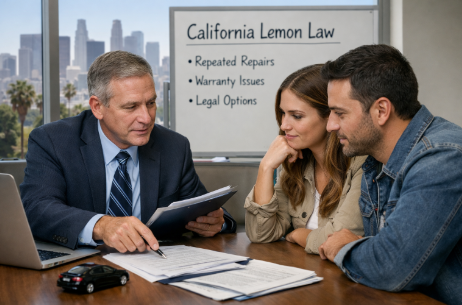
Key Takeaways
- California’s Lemon Law protects qualifying vehicle owners when manufacturers fail to repair serious defects.
- Lemon Law Experts understand state-specific rules, deadlines, and manufacturer procedures.
- Free consultations help drivers assess whether their vehicle may qualify under the law.
- Legal representation can help ensure documentation, timelines, and communications are handled properly.
- Working with experienced professionals supports informed, compliant decision-making.
Introduction
Los Angeles drivers often turn to Lemon Law Experts because California’s vehicle protection laws are detailed, procedural, and time-sensitive. When repeated repairs fail to resolve persistent car problems, professional guidance can help drivers understand their rights and obligations under state law. Drivers seeking localized insights can consult a Los Angeles Lemon Law Guide to review area-specific procedures and repair standards.
For auto owners dealing with ongoing mechanical or safety issues, the process can feel uncertain. Manufacturers typically have structured claim systems and legal teams. Understanding how California’s Lemon Law applies to a specific vehicle requires careful review of service records, warranty coverage, and repair attempts. Experienced professionals help ensure that claims are evaluated accurately and handled according to legal standards.
Understanding California’s Lemon Law
California’s Lemon Law is formally known as the Song-Beverly Consumer Warranty Act. It provides protections to consumers who purchase or lease vehicles that remain defective after a reasonable number of repair attempts.
What Qualifies as a Lemon?
A vehicle may qualify if:
- It has a substantial defect affecting use, value, or safety
- The defect occurs during the manufacturer’s warranty period
- The manufacturer has been given a reasonable number of repair attempts
- The issue remains unresolved
In many cases, a vehicle that has been out of service for an extended number of days due to warranty repairs may also qualify. However, eligibility depends on specific facts and documentation.
Why Location Matters
Los Angeles drivers operate in one of the largest automotive markets in the United States. High traffic density and heavy daily vehicle use often mean that persistent defects significantly disrupt daily life.
Because California law is state-specific, understanding how it applies locally is important. Lemon Law Experts who regularly handle cases in Los Angeles are familiar with regional manufacturer practices and court procedures.
Why Legal Guidance Matters in Los Angeles
Manufacturers have internal departments dedicated to warranty disputes. While some claims are resolved through internal review, others may require formal legal action. Consulting an experienced California Lemon Law Attorney provides clarity on whether your vehicle’s repair history satisfies legal standards.
Lemon Law Experts focus on:
- Interpreting warranty terms
- Assessing repair history
- Evaluating whether a “reasonable number” of attempts has occurred
- Ensuring compliance with procedural requirements
For drivers unfamiliar with legal terminology, these details can be difficult to interpret. Errors in documentation or missed deadlines may affect a claim’s viability. Legal guidance helps drivers make informed decisions rather than relying on assumptions or informal advice.
What Lemon Law Experts Actually Do
Many vehicle owners are unsure what professional representation involves. Lemon Law Experts provide structured support throughout the claim process.
Case Evaluation and Eligibility Review
The first step typically involves reviewing:
- Purchase or lease agreements
- Warranty documents
- Repair invoices
- Service timelines
This evaluation determines whether the vehicle potentially meets California’s legal thresholds. A professional review reduces uncertainty and helps drivers understand realistic options.
Managing Manufacturer Communications
Communication with manufacturers must be precise and documented. Informal conversations or incomplete notices can complicate claims.
Lemon Law Experts help ensure that:
- Written notices are properly formatted
- Repair histories are organised
- Deadlines are observed
- Correspondence is preserved
This structured approach supports clarity and compliance.
Negotiation and Legal Representation
If a claim proceeds beyond internal review, formal negotiation or litigation may occur.
Legal representation may involve:
- Settlement discussions
- Arbitration proceedings
- Filing legal complaints in court
Not all cases proceed to litigation. However, having representation ensures that procedural rules are followed correctly if disputes escalate.
The Importance of Free Consultations
Free consultations play an important role in informed decision-making. They allow drivers to:
- Ask questions without financial commitment
- Understand whether their situation may qualify
- Clarify misconceptions about eligibility
- Learn about documentation requirements
Importantly, a consultation does not guarantee an outcome. It provides information that helps drivers decide whether to move forward.
For Los Angeles auto owners facing repeated breakdowns or safety concerns, this initial step can offer clarity and reduce confusion. Reviewing a comprehensive California Lemon Law Guide before your consultation can also help you prepare the necessary vehicle and repair documents.
Common Challenges Drivers Face
Even when defects are ongoing, Lemon Law claims are not automatic.
Incomplete Repair Documentation
Missing invoices or unclear service records can create uncertainty. Detailed repair history is often central to eligibility.
Misunderstanding “Reasonable Attempts”
There is no single number that applies universally. The definition depends on:
- Severity of the defect
- Safety implications
- Time out of service
Each case requires careful analysis.
Manufacturer Disputes
Manufacturers may argue that:
- The issue is not substantial
- The defect was repaired
- The vehicle was misused
Understanding how these arguments are addressed under California law requires legal familiarity.
Risks, Limitations, and Practical Considerations
Lemon Law cases are fact-specific. Not every defective vehicle qualifies.
Drivers should be aware that:
- The defect must arise within the warranty period
- Delays in reporting issues can affect eligibility
- Modifications or misuse may complicate claims
- Resolution timelines vary
Additionally, outcomes depend on documentation, repair history, and legal interpretation. Responsible legal professionals avoid making guarantees.
The goal of representation is to apply the law accurately and fairly, not to promise specific results.
Conclusion
Los Angeles drivers trust Lemon Law Experts because California’s vehicle warranty protections are detailed and procedural. When persistent defects remain unresolved, professional guidance helps ensure claims are evaluated accurately and handled in compliance with state law.
Understanding eligibility, maintaining documentation, and navigating manufacturer responses require careful attention. By focusing on clarity and lawful process, drivers can make informed decisions about how to address ongoing vehicle problems.
Summary
California’s Lemon Law provides structured protections for qualifying vehicle owners. However, eligibility depends on documentation, repair attempts, and warranty coverage. Lemon Law Experts assist with case evaluation, communication, and legal representation, helping Los Angeles drivers understand their options without guarantees or exaggerated claims.
Book a Strategy or Discovery Call
If you are a Los Angeles vehicle owner experiencing persistent car problems, a strategy or discovery call can help clarify your situation.
This discussion is designed to review your repair history, explain how California law may apply, and outline possible next steps. There is no obligation or pressure; the purpose is to support informed, practical decision-making based on your specific circumstances.
Frequently Asked Questions
1. What is considered a “reasonable number” of repair attempts in California?
It depends on the defect’s severity and impact on safety. Multiple attempts for the same issue or extended time out of service may meet the standard, but each case is evaluated individually.
2. Does the vehicle need to be brand new to qualify?
Not necessarily. Certain used vehicles may qualify if they are still covered by the manufacturer’s original warranty.
3. How long do I have to file a Lemon Law claim in California?
Claims are generally tied to warranty periods and statutory deadlines. Consulting early helps ensure compliance with timing requirements.
4. What documents should I keep?
Maintain all repair invoices, warranty documents, purchase or lease agreements, and written communications with the manufacturer or dealership.
5. Will filing a claim automatically result in a refund or replacement?
No. Each case is evaluated based on facts, documentation, and legal standards. Outcomes depend on the specific circumstances.
6. Do I have to go to court for a Lemon Law case?
Not always. Some matters are resolved through negotiation or arbitration. Litigation is one possible path, but not every case requires it.
7. What happens during a free consultation?
A legal professional reviews your documentation, asks clarifying questions, and explains how California law may apply. It is an informational discussion, not a guarantee of representation or outcome.