
Key Takeaways:
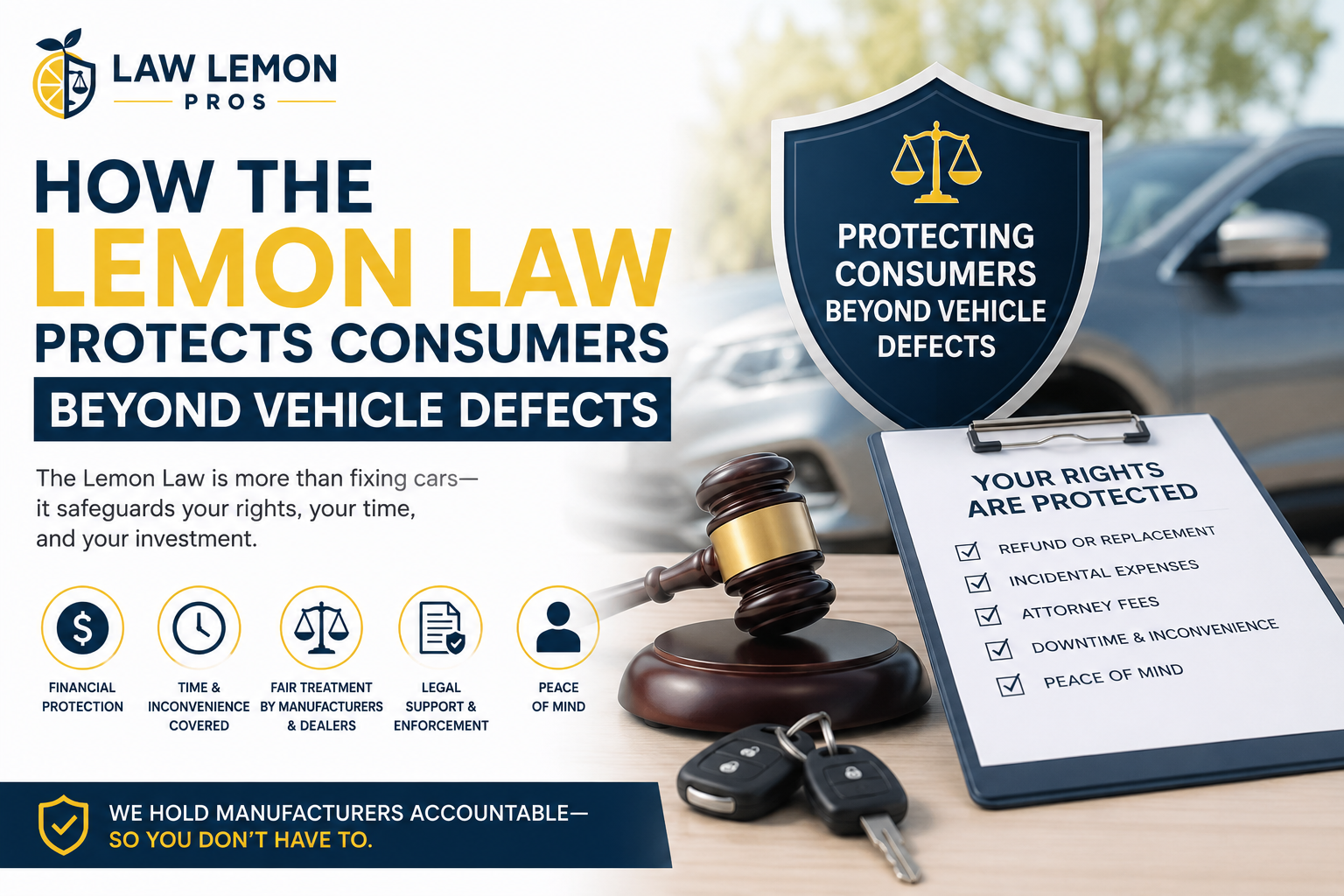
- Lemon law protection extends beyond defects to include warranties and fair processes.
- Disclosure rules help ensure transparency when buying or reselling vehicles.
- Repair timelines and manufacturer responsibilities are part of legal protections.
- Coverage varies by state, with different rules and limitations.
- Understanding these areas supports informed decisions for car owners.
Introduction
Yes, lemon law protection goes beyond vehicle defects by covering warranties, disclosure requirements, and fair repair processes. For car owners in the USA, this is important because issues with a vehicle are not always limited to mechanical faults. Legal protections also address how manufacturers and dealers respond to those issues. Understanding this broader scope helps clarify consumer rights and responsibilities when dealing with ongoing vehicle concerns.
What Is Lemon Law Protection?
Lemon law protection refers to state-based laws that support consumers when vehicles do not meet expected standards during a warranty period.
Core Purpose of Lemon Laws
These laws aim to ensure that manufacturers address unresolved issues within a reasonable timeframe. While defects are central, the laws also regulate how those defects are handled.
Scope Beyond Defects
Lemon law protection may include:
- Enforcing warranty terms
- Ensuring proper disclosure of vehicle history
- Providing structured repair processes
These elements contribute to overall consumer protection.
Warranty Enforcement Under Lemon Law
Understanding Warranty Coverage
Most lemon law protections depend on an active manufacturer’s warranty. This document outlines repair obligations and coverage limits.
When Warranty Issues Arise
If a manufacturer does not follow warranty terms, lemon law protection may apply. This includes situations where:
- Repairs are not completed as outlined
- Coverage is denied without clear explanation
- Issues continue despite service attempts
Role of Documentation
Keeping records of warranty terms and repair visits helps demonstrate whether obligations are being met.
Disclosure Requirements and Consumer Awareness
What Sellers Must Disclose
In some states, sellers are required to inform buyers about a vehicle’s past, especially if it was previously classified as defective.
This may include:
- Prior buyback status
- History of major defects
- Warranty limitations
Importance of Transparency
Disclosure rules aim to ensure buyers have accurate information before making a purchase. This supports fair decision-making.
Repair Process Protections
Reasonable Number of Repair Attempts
Lemon law protection often defines how many attempts must be made to fix an issue. This creates a clear structure for both parties.
Time Out of Service
If a vehicle is unavailable for an extended period due to repairs, this may be considered when assessing the situation.
Tracking Repairs
Maintaining a timeline of repairs helps clarify whether legal thresholds have been met.
Manufacturer and Dealer Responsibilities
Expected Conduct
Lemon law protection may address situations where:
- Repairs are delayed without justification
- Communication lacks clarity
- Warranty obligations are disputed
Ensuring Fair Processes
These laws aim to balance responsibilities between consumers and manufacturers. They provide a framework for resolving disputes.
Protection Against Misrepresentation
Understanding Misrepresentation
Misrepresentation occurs when a vehicle’s condition or history is presented inaccurately.
How Lemon Laws Relate
While other consumer protection laws may also apply, lemon law protection can overlap in cases involving undisclosed defects or misleading information.
Consumer Impact
Clear and accurate information helps prevent misunderstandings during vehicle transactions.
State Variations in Lemon Law Protection
Differences Across States
Each state in the USA defines its own lemon law rules. These may vary in:
- Eligibility criteria
- Types of vehicles covered
- Filing deadlines
- Dispute resolution procedures
Why State Law Matters
The extent of lemon law protection beyond defects depends on local regulations. Understanding state-specific rules is essential.
Limitations of Lemon Law Protection
Not All Issues Are Covered
Minor or cosmetic issues may not meet the threshold required under lemon laws.
Warranty Dependency
Most protections apply only within the warranty period. Once expired, options may be limited.
Documentation Requirements
Claims often rely on clear and consistent records. Missing information can affect how a case is reviewed.
Time Constraints
Each state sets deadlines for filing claims. Delays may reduce eligibility.
Practical Considerations for Car Owners
Keeping Accurate Records
Maintaining repair invoices, communication logs, and warranty details helps support any future review.
Understanding Legal Criteria
Knowing how lemon law protection applies can help identify whether a situation falls within its scope.
Seeking Clarification Early
If uncertainty arises, reviewing rights early can help avoid confusion during later stages.
When Lemon Law Protection May Apply Beyond Defects
Car owners may consider these protections when:
- Warranty terms appear unclear or unmet
- A vehicle’s history was not fully disclosed
- Repairs continue without resolution
- Communication with the dealer or manufacturer becomes inconsistent
Recognising these situations helps in assessing available options.
Conclusion
Lemon law protection in the USA extends beyond vehicle defects by covering warranties, disclosure requirements, and repair processes. These laws aim to ensure fair treatment and transparency between consumers and manufacturers. While limitations and state differences exist, understanding the broader scope of lemon law protection allows car owners to approach vehicle-related concerns with greater clarity and informed judgement.
Book a Call
If you would like to better understand how lemon law protection applies to your situation, you may consider speaking with a qualified professional. This can help clarify your rights, relevant state laws, and available processes, without obligation or expectation of a specific outcome.
Frequently Asked Questions
1. Does lemon law protection only apply to defects?
No, it also includes warranty enforcement, disclosure obligations, and repair processes.
2. Are all vehicles covered under lemon law protection?
Coverage varies by state and may depend on whether the vehicle is new, used, or under warranty.
3. What happens if a seller does not disclose a vehicle’s history?
In some cases, this may be addressed under lemon law protection or other consumer laws, depending on state regulations.
4. How many repair attempts are required?
The number varies by state, with laws defining what is considered reasonable.
5. Does lemon law protection apply after the warranty expires?
In most cases, protections are tied to the warranty period, though some exceptions may apply.
6. Why is documentation important?
Records of repairs and communication help demonstrate whether legal criteria have been met.
7. Do state laws differ significantly?
Yes, each state has its own rules, which affect eligibility and processes.