
Key Takeaways:
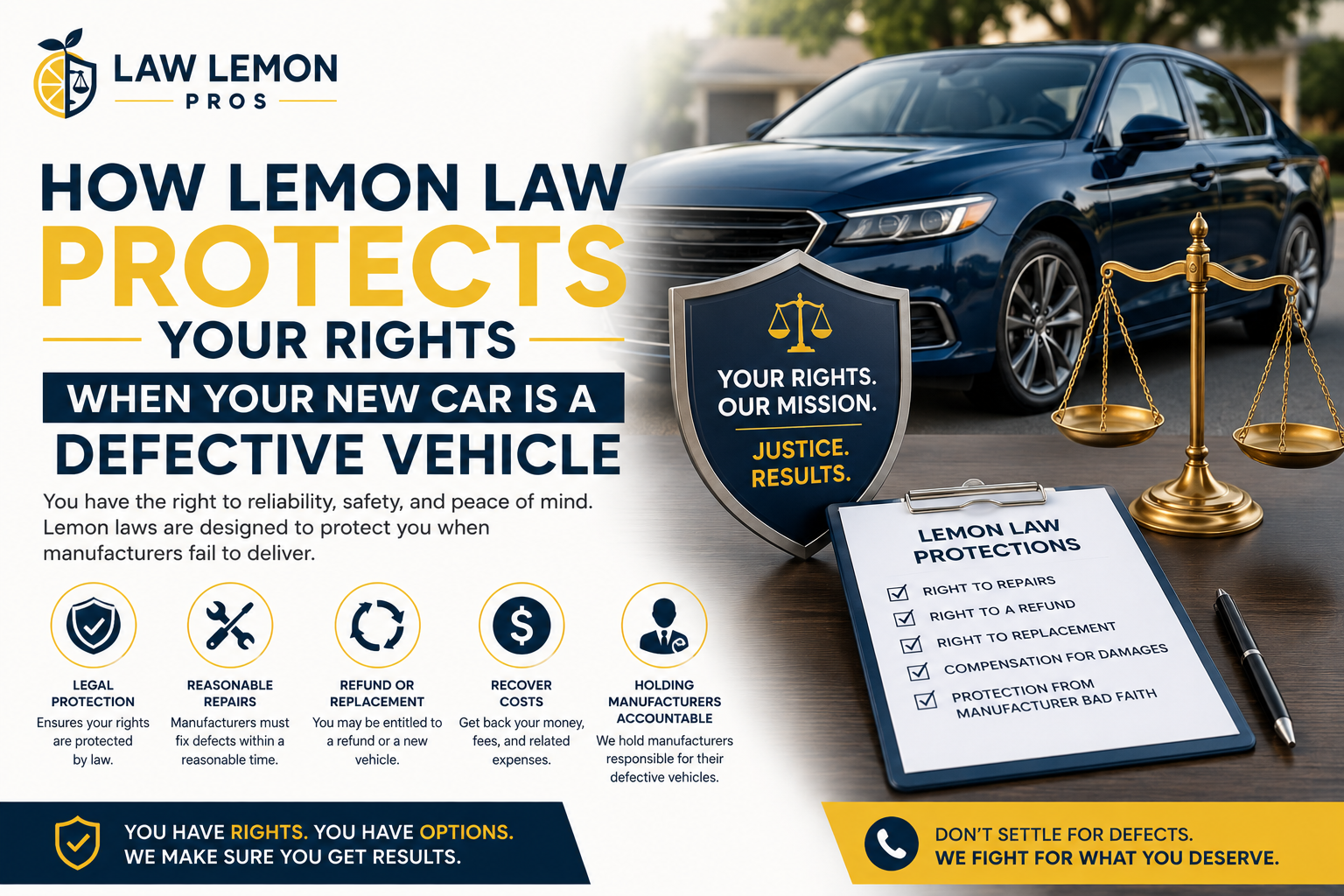
Lemon law rights give buyers of a new vehicle a structured path to seek repairs, a replacement, or a refund.
Consumer protection lemon law standards focus on warranty enforcement, repair attempts, and disclosure duties.
Most claims depend on documenting repeated issues during the manufacturer warranty period.
Each state defines its own eligibility criteria, timelines, and remedies.
Knowing how the process works helps owners respond to ongoing concerns with clarity.
Introduction
Few experiences are more frustrating than buying a brand-new vehicle and then dealing with the same problem again and again. When a defective new car keeps returning to the service center, owners often wonder what options they actually have. In the USA, state laws outline what a manufacturer must do, how repair attempts are counted, and what remedies may be available. This article explains the broader framework so you can better understand where your protections begin and how the process is structured.
What Are Lemon Law Rights?
Lemon law rights are state-based protections for buyers whose new vehicles fail to meet expected quality and performance standards during the warranty period.
Why These Rights Exist
These laws were created to address situations where repeated repairs do not resolve a problem. They aim to balance the relationship between buyers and manufacturers when a vehicle continues to underperform.
What They Typically Cover
These rules generally include:
A defined number of repair attempts for the same issue
Time-out-of-service thresholds
Possible remedies such as replacement or refund
Together, these elements form the foundation of consumer protection lemon law standards across most states.
Identifying a Defective New Car
Common Signs of a Defective Vehicle
A defective new car often shows recurring problems that affect use, value, or safety. Owners may notice persistent warning lights, drivability issues, or repeated mechanical failures.
When an Issue Becomes a Pattern
A single repair visit usually does not qualify for protection. The same defect generally must reappear after a reasonable number of attempts to fix it.
Why Documentation Matters
Keeping copies of repair orders, dates, and communication helps establish whether the situation aligns with state thresholds.
Warranty Coverage and Lemon Law Rights
The Role of the Manufacturer Warranty
Most protections are tied to the original manufacturer warranty. This document outlines what is covered, for how long, and under what conditions.
When Warranty Service Falls Short
The law may apply when the dealer or manufacturer does not honor warranty terms, such as denying covered repairs or leaving issues unresolved.
Linking Warranty Records to Your Claim
Detailed warranty records, alongside repair invoices, help show whether the vehicle has been given a fair chance to be fixed.
Repair Attempts and Time Out of Service
Defining a Reasonable Number of Attempts
Many states define how many repair attempts qualify as reasonable. This threshold gives both consumers and manufacturers a clear reference point.
Tracking Days in the Shop
If a vehicle spends a significant number of days unavailable due to repairs, this period may also be considered when reviewing a claim.
Keeping a Repair Timeline
A simple timeline of visits, parts replaced, and outcomes helps clarify whether legal thresholds have been met.
Disclosure and Buyer Awareness
What Sellers May Need to Share
In several states, sellers must disclose if a vehicle was previously bought back under a defect-related claim. This may include details about prior defects or warranty adjustments.
Why Transparency Supports Your Rights
Clear disclosure helps buyers make informed choices and aligns with the broader goals of consumer protection rules.
Responsibilities of Manufacturers and Dealers
Expected Conduct During the Process
The law may be triggered when:
Repairs are delayed without clear reasons
Warranty coverage is disputed without explanation
Communication with the buyer becomes inconsistent
Supporting a Fair Resolution
These rules aim to create a fair structure for resolving issues with a faulty vehicle, rather than leaving owners without a clear path forward.
Possible Remedies Under Lemon Law Rights
Repair, Replacement, or Refund
Depending on the state, remedies may include continued repair attempts, a replacement vehicle of comparable value, or a refund of the purchase price minus a usage allowance.
Factors That Influence the Outcome
The specific remedy often depends on the type of defect, the number of repair attempts, and whether the issue substantially impairs use, value, or safety.
Why Outcomes Vary
Because rules differ between states, two similar cases may lead to different results based on where the vehicle was purchased and registered.
State Variations Across the USA
How Rules Differ Across the Country
State laws may differ in several ways, including:
Vehicles covered (new only, used, or leased)
Number of repair attempts required
Time-out-of-service standards
Filing deadlines and dispute procedures
Why Local Rules Matter
The scope of protection often depends on the state where the vehicle was sold. Reviewing state-specific guidance is an important early step.
Limitations of These Protections
Not Every Issue Qualifies
Minor or cosmetic concerns generally do not meet the threshold required under consumer protection lemon law rules.
Warranty Period Restrictions
Most rights apply only while the manufacturer warranty is active. Once it expires, available options often narrow.
Need for Clear Records
Claims usually rely on consistent paperwork. Missing or unclear documentation can affect how a case is reviewed.
Filing Deadlines
States set time limits for raising a claim. Delays may reduce the options available to an owner.
Practical Steps for Car Owners
Maintain Organized Records
Save every repair order, invoice, and message exchanged with the dealer or manufacturer. These records support any future review of your situation.
Understand Your Warranty
Read the warranty booklet so you know what is covered, what is excluded, and how to request repairs properly.
Act Within Time Limits
Because deadlines vary by state, raising questions early helps avoid losing the chance to seek a remedy later.
When These Rights May Apply
Owners may want to review their options more closely when:
The same defect appears after several repair visits
A new vehicle spends extended time at the service center
Warranty terms appear unclear or unmet
Communication with the dealer or manufacturer breaks down
Recognizing these patterns early can help in deciding whether to seek further guidance.
Conclusion
Lemon law rights give buyers in the USA a structured way to respond when a new vehicle does not perform as it should. By outlining warranty duties, repair expectations, and possible remedies, the wider framework of consumer protection lemon law standards aims to provide clarity for both sides. While state rules differ and limitations apply, understanding how these protections work helps car owners approach issues with a defective new car in an informed, calm, and organized way.
Book a Call
If you would like to better understand how these protections may apply to your situation, you may consider speaking with a qualified professional. A focused conversation can help clarify state rules, review your repair history, and outline the options available, without obligation or expectation of a specific outcome.
Frequently Asked Questions
What are lemon law rights?
They are legal protections that help buyers when a new vehicle has repeated defects during the warranty period.
What qualifies as a defective new car?
Generally, a new vehicle with a substantial defect that persists after a reasonable number of repair attempts.
Does this kind of protection apply in every state?
Most states have their own version of these laws, though specific rules, timelines, and remedies vary.
How many repair attempts are usually required?
The number depends on state law, but several attempts for the same issue is a common standard.
Do these protections cover used or leased vehicles?
Some states extend coverage to certain used or leased vehicles, while others focus on new cars under warranty.
What remedies might be available?
Possible outcomes include further repairs, a replacement vehicle, or a refund, depending on state rules and the specific case.
Why is documentation so important?
Clear records of repairs, dates, and communication help show whether the criteria for a valid claim have been met.