
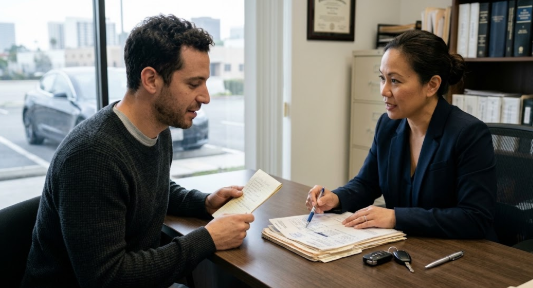
Key Takeaways
- Ask whether the attorney has experience handling California lemon law cases involving vehicles like yours.
- Find out which warranty documents, repair orders, and other records are needed to assess your situation.
- Understand the attorney’s fee structure, possible costs, and how expenses are handled.
- Discuss possible remedies, claim timelines, and factors that could affect your case.
- Choose an attorney who explains your options clearly without guaranteeing a particular result.
Introduction
Before hiring a California lemon law attorney, ask about their experience, how they evaluate vehicle defect claims, what documents they need, how fees work, and what outcomes may be legally available. These questions can help you understand whether the attorney is suited to review your circumstances and explain your options. They also give you a chance to understand the process before deciding whether to move forward.
California drivers may consider legal guidance when a vehicle repeatedly develops problems despite repair attempts. However, repeated breakdowns do not automatically mean a vehicle qualifies under California’s lemon law. Warranty coverage, the nature of the defect, repair history, and other legal requirements can all affect eligibility. Asking clear questions helps you make an informed decision rather than relying on assumptions or promises.
1. What Experience Do You Have With California Lemon Law Cases?
Start by asking about the attorney’s experience with claims under California’s Song-Beverly Consumer Warranty Act and other potentially relevant laws. A California lemon law attorney should be able to explain how these laws may apply to vehicle defects and warranty disputes.
Questions to Ask
- How often do you handle California lemon law cases?
- Have you reviewed cases involving a vehicle similar to mine?
- Do you handle cases involving new, used, leased, or certified pre-owned vehicles?
- Who will manage my case and communicate with me?
The goal is to understand the attorney’s relevant experience and approach. An attorney should be able to explain their role, the types of cases they handle, and any limits to their experience without relying on unsupported claims.
2. Does My Vehicle Potentially Qualify Under California Lemon Law?
Not every vehicle with recurring problems qualifies for legal protection. Ask the California lemon law attorney to explain the eligibility factors that may apply to your situation.
Relevant details may include the vehicle’s purchase or lease agreement, manufacturer’s warranty, defect, repair attempts, and time spent out of service. Certain used vehicles may also qualify, depending on the warranty and circumstances.
Questions to Ask
- Does my vehicle’s warranty cover the reported problem?
- Does the defect appear to affect the vehicle’s use, value, or safety?
- Do my repair attempts meet any relevant legal standards?
- Does the vehicle’s purchase or lease history affect eligibility?
A careful assessment should distinguish between facts already established and details that still need verification. If the available information is incomplete, the attorney may need additional records before offering an informed opinion.
3. What Documents Should I Prepare?
Organized records help an attorney understand what happened, when the problem began, and how the dealership or manufacturer responded. Before the consultation, ask which documents would be most useful.
A California lemon law attorney will commonly want to review repair records and warranty information, but the exact documents depend on the circumstances.
Useful Documents to Gather
- Purchase or lease agreement
- Manufacturer’s warranty booklet
- Dealership repair orders and service invoices
- Records showing when the vehicle was unavailable for repairs
- Emails, letters, and messages with the dealership or manufacturer
- Any relevant diagnostic reports or recall notices
Create a simple timeline listing each repair visit, the reported symptoms, the work performed, and whether the problem returned. If you are missing paperwork, ask whether it can be obtained from the dealership or manufacturer. Do not assume that missing documents automatically prevent a claim.
4. How Will You Evaluate the Repair History?
Repair history is often an important part of a lemon law review. Ask how the attorney will assess repeated repair attempts, unresolved defects, and periods when the vehicle could not be used.
California law contains a presumption that may apply to certain vehicles when specified conditions are met within the first 18 months after delivery or the first 18,000 miles, whichever comes first. These conditions include particular numbers of repair attempts for the same problem, certain serious safety defects, or more than 30 cumulative calendar days out of service for qualifying repairs.
These thresholds do not establish a universal rule for every claim. A vehicle may still warrant review outside the presumption, depending on the evidence and applicable law.
Questions to Ask
- How do you determine whether the repair history is legally significant?
- Should I request additional service records?
- How should I document a defect that happens intermittently?
- What information is still missing from my records?
A California lemon law attorney should explain how the repair history affects the assessment and identify any important gaps without suggesting that a particular number of repairs guarantees a result.
5. What Legal Fees and Other Costs Should I Expect?
Understanding fees before hiring an attorney helps prevent confusion later. Ask for a clear explanation of the fee arrangement and any costs that might arise during the claim.
California’s lemon law has provisions that may allow a prevailing consumer to recover reasonable attorney fees and costs from a manufacturer in qualifying circumstances. However, how fees and expenses apply depends on the legal basis of the claim and its outcome.
Questions to Ask
- Do you offer a free initial consultation?
- How are your attorney fees handled?
- Could I be responsible for any expenses?
- What happens to fees and costs if the claim does not succeed?
- Will I receive the fee agreement in writing?
Do not rely only on phrases such as “no upfront fees.” Ask what the agreement actually says, whether any exceptions apply, and who is responsible for costs under different circumstances. Review the written agreement carefully before signing.
6. What Outcomes May Be Available, and What Could Affect Them?
A California lemon law attorney should explain the remedies that may be available under the law and the facts that could influence them. Depending on the circumstances, a qualifying claim may involve a vehicle repurchase, replacement, or another legally available resolution.
A repurchase calculation may include specific deductions, such as an allowance for use before the first qualifying repair attempt, where applicable. The amount and form of any remedy depend on the law, the vehicle’s history, and the details of the claim.
Questions to Ask
- What remedies might apply to my situation?
- What facts could weaken or complicate the claim?
- How would a potential repurchase amount be calculated?
- Are there alternatives to pursuing a formal legal claim?
Be cautious if anyone guarantees a buyback, replacement, payment amount, or specific outcome before reviewing the evidence. Ethical legal guidance explains possibilities and uncertainties rather than promising results.
7. How Long Could the Process Take?
The timeline for a California lemon law claim varies. Some matters may be resolved through discussions, while others require additional investigation, formal legal procedures, or litigation. The complexity of the defect, the quality of the records, and the manufacturer’s response can all affect the process.
Ask the attorney what stages may apply to your case and when you should expect updates. It is also useful to understand whether there are deadlines that require prompt action.
Questions to Ask
- What are the likely next steps after reviewing my documents?
- What factors could delay the process?
- How often will you update me?
- Are there important filing deadlines I should know about?
An attorney may be able to describe a general process, but a precise timeline may not be possible at the beginning. Ask for realistic expectations and a clear communication plan rather than a guaranteed completion date.
8. How Will You Communicate With Me About My Case?
Good communication helps you understand what is happening and what decisions may require your attention. Before hiring a California lemon law attorney, ask who your main contact will be and how you can reach the legal team.
Find out how quickly the office generally responds, how often it provides updates, and whether important advice or decisions will be documented in writing.
You should feel comfortable asking questions and requesting clarification. If you do not understand a legal term or proposed step, ask the attorney to explain it in plain English.
Conclusion
Choosing a California lemon law attorney involves more than finding someone who handles vehicle defect claims. It means understanding the attorney’s experience, how they assess eligibility, which records are needed, how fees work, and what legal options may be available.
Asking these questions before hiring an attorney can help you compare your options and understand the responsibilities involved. Review the written fee agreement, keep accurate repair records, and pay attention to any applicable deadlines. No attorney can guarantee a specific result, but clear explanations and realistic expectations can support better decision-making.
Schedule a Free Consultation
If your vehicle continues to experience unresolved problems, speaking with a California lemon law professional may help you understand which legal options are worth exploring.
Use the consultation to ask questions about your repair history, warranty coverage, documentation, and possible next steps. The purpose is to gain clarity and understand your options, without pressure or a promise of a particular result. Each case is different, and any legal assessment depends on the facts and applicable law.
Schedule a Free Consultation to Discuss Your California Lemon Law Options
Frequently Asked Questions
When should I contact a California lemon law attorney?
Consider seeking guidance when a vehicle has recurring defects that remain unresolved after warranty repair attempts. Early review may help you understand your rights, identify missing documents, and avoid overlooking relevant deadlines.
Is a free consultation enough to determine whether my car qualifies?
An initial consultation can help identify potential issues, but a complete assessment may require reviewing repair orders, warranty terms, purchase documents, and other evidence. The attorney may need additional information before reaching a conclusion.
Can I hire a California lemon law attorney for a used car?
Yes, you can ask an attorney to review a used vehicle. Whether the vehicle qualifies depends on factors such as warranty coverage, the purchase or lease circumstances, the defect, and applicable legal requirements.
What if I do not have all my repair records?
Tell the attorney which documents are missing. You may be able to request copies from the dealership or manufacturer. Missing records can make an assessment more difficult, but they do not automatically mean you cannot pursue a claim.
Do I have to pay attorney fees upfront?
Fee arrangements vary. Some lemon law attorneys offer consultations without charge or handle qualifying claims under arrangements that do not require upfront attorney fees. Ask about all possible expenses and review the written agreement before hiring anyone.
Can an attorney guarantee that I will get a vehicle buyback?
No ethical attorney should guarantee a particular outcome. Eligibility and available remedies depend on the facts, supporting evidence, and applicable law. An attorney can explain the possible outcomes and uncertainties after reviewing your situation.
Can I change attorneys if I am unhappy with the communication?
You can generally consider changing attorneys, subject to applicable rules and the terms of your agreement. Before making a decision, review your agreement, ask about any potential costs, and understand how changing representation could affect your case.