
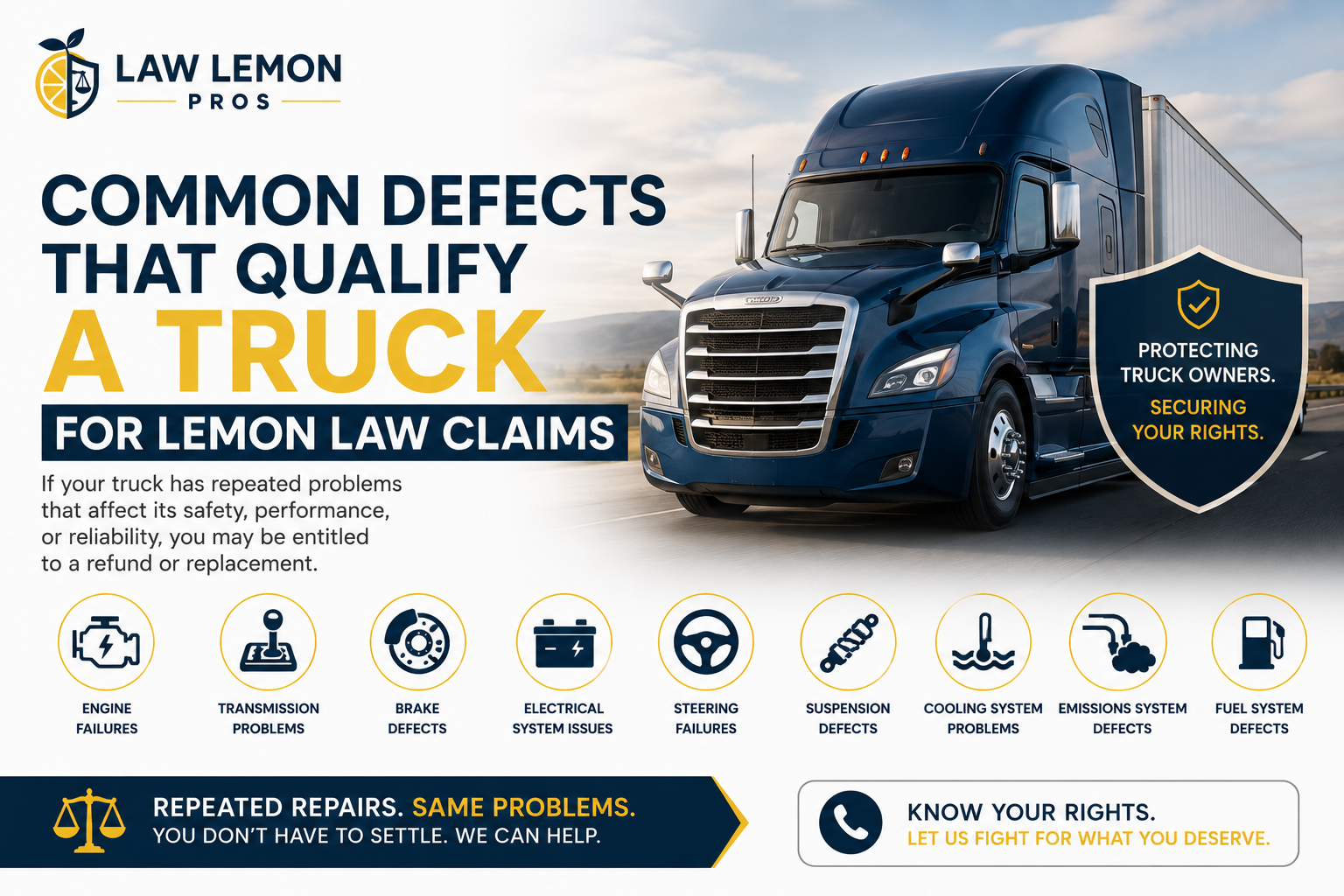
Key Takeaways:
- Truck lemon law claims typically involve defects affecting use, value, or safety.
- Engine, transmission, brake, and electrical issues are commonly assessed.
- Repeated repair attempts within the warranty period are often required.
- Documentation and timelines play a central role in determining eligibility.
- Not all defects qualify, and laws vary by state across the USA.
Introduction
Common defects that may qualify a truck for lemon law claims include persistent engine problems, transmission failures, brake issues, and electrical malfunctions that affect the vehicle’s use, value, or safety. For truck owners in the USA, this matters because trucks are often used for work, transport, and daily activities where reliability is essential. Understanding which defects are typically considered under lemon law helps clarify whether a situation may meet legal criteria and what factors influence eligibility.
Understanding Truck Lemon Law Claims
Truck lemon law claims fall under state-based consumer protection laws. These laws apply when a vehicle has recurring issues that are not resolved within a reasonable number of repair attempts.
Key Requirements for Eligibility
Most states consider:
- Whether the defect substantially affects use, value, or safety
- The number of repair attempts made
- Whether the issue occurred within the warranty period
These criteria guide how claims are assessed rather than guaranteeing outcomes.
Engine-Related Defects
Common Engine Issues
Engine problems are among the most reported defects in truck lemon law claims. These may include:
- Engine stalling during operation
- Excessive oil consumption
- Overheating under normal conditions
- Failure to start consistently
Why Engine Defects Matter
The engine is central to the truck’s operation. Issues that affect reliability or safety may be considered significant, especially if they persist after multiple repairs.
Transmission Problems
Types of Transmission Defects
Transmission-related concerns often include:
- Delayed or rough shifting
- Slipping gears
- Failure to engage or disengage properly
- Unusual noises during gear changes
Impact on Vehicle Use
Transmission defects can affect drivability and control. When unresolved, they may influence how the truck performs under normal use conditions.
Brake System Failures
Common Brake Issues
Brake-related defects may involve:
- Reduced braking response
- Brake pedal vibration or noise
- Premature wear of brake components
- Brake system warning indicators
Safety Considerations
Brake systems are directly linked to vehicle safety. Persistent issues may be evaluated more closely due to their potential impact on safe operation.
Electrical System Malfunctions
Examples of Electrical Issues
Modern trucks rely on complex electrical systems. Common defects include:
- Faulty wiring or short circuits
- Malfunctioning dashboard indicators
- Power system failures (windows, locks, lighting)
- Issues with onboard computer systems
Challenges in Diagnosis
Electrical defects can be difficult to identify and repair. Repeated unsuccessful repairs may contribute to a claim.
Steering and Suspension Problems
Typical Defects
Steering and suspension issues may involve:
- Difficulty steering or loss of control
- Uneven tyre wear due to alignment issues
- Suspension noise or instability
- Excessive vibration while driving
Effect on Vehicle Performance
These systems influence handling and stability. Persistent problems may affect both safety and usability.
Fuel System Defects
Common Fuel System Issues
Fuel-related defects can include:
- Fuel leaks
- Inaccurate fuel gauge readings
- Poor fuel delivery affecting engine performance
- Strong fuel odours
Relevance to Lemon Law Claims
Fuel system problems may be considered if they affect normal operation or pose safety concerns, particularly when repairs do not resolve the issue.
Heating, Cooling, and Air Conditioning (HVAC) Issues
Examples of HVAC Defects
- Air conditioning not functioning properly
- Heating system failure
- Inconsistent temperature control
- Ventilation system malfunctions
When HVAC Issues May Qualify
While some HVAC issues may be minor, persistent failures that affect usability—especially in extreme weather—may be considered under certain conditions.
Structural and Build-Related Defects
Types of Structural Issues
- Frame misalignment
- Water leaks into the cabin
- Poor sealing of doors or windows
- Body panel defects affecting function
Importance of Structural Integrity
Structural problems may influence safety, durability, and overall usability. These issues are typically assessed based on severity and recurrence.
Factors That Determine Whether a Defect Qualifies
Number of Repair Attempts
Most states require a “reasonable” number of attempts to fix the same issue before it may qualify.
Time Out of Service
If a truck is unavailable for use due to repairs for an extended period, this may be considered.
Warranty Coverage
Defects must usually occur within the manufacturer’s warranty period.
Documentation
Accurate records of repairs, dates, and communication are essential for evaluating claims.
Limitations of Truck Lemon Law Claims
Not All Defects Qualify
Minor or cosmetic issues are generally not covered unless they significantly affect use or safety.
State Law Differences
Each state defines its own criteria, which may affect eligibility and processes.
Commercial Use Considerations
Some states have specific rules for trucks used for business purposes, which may limit coverage.
Understanding these limitations helps set realistic expectations.
When to Review Your Situation
Truck owners may consider reviewing their situation when:
- The same defect continues after multiple repairs
- The truck has been out of service for extended periods
- The issue affects safety or normal operation
- Warranty coverage is still active
Early awareness of these factors can help in understanding available options.
Conclusion
Common defects that may qualify a truck for lemon law claims include engine failures, transmission problems, brake issues, electrical malfunctions, and other faults that affect use, value, or safety. However, eligibility depends on factors such as repair attempts, warranty coverage, and state-specific regulations. By understanding both the types of defects and the limitations of lemon laws, truck owners in the USA can approach their situation with a clearer and more informed perspective.
Book a Call
If you would like to better understand how truck lemon law claims apply to your situation, you may choose to speak with a qualified professional. This can help clarify relevant laws, documentation requirements, and possible next steps, without obligation or expectation of a specific outcome.
Frequently Asked Questions
1. What types of defects are most commonly involved in truck lemon law claims?
Engine, transmission, brake, and electrical system defects are frequently assessed, especially when they persist after repairs.
2. Do all truck defects qualify under lemon law?
No, defects must typically affect use, value, or safety and meet specific legal criteria.
3. How many repair attempts are usually required?
This varies by state, but laws often define a reasonable number of attempts before further action may be considered.
4. Can trucks used for business qualify for lemon law claims?
Some states include commercial vehicles under certain conditions, while others may have restrictions.
5. Is warranty coverage required for a claim?
In most cases, the defect must occur within the manufacturer’s warranty period.
6. What role does documentation play in a claim?
Repair records, invoices, and communication history help demonstrate whether legal criteria are met.
7. Are safety-related defects treated differently?
Safety issues may be assessed more closely due to their impact on vehicle operation, depending on state law.