
Key Takeaways
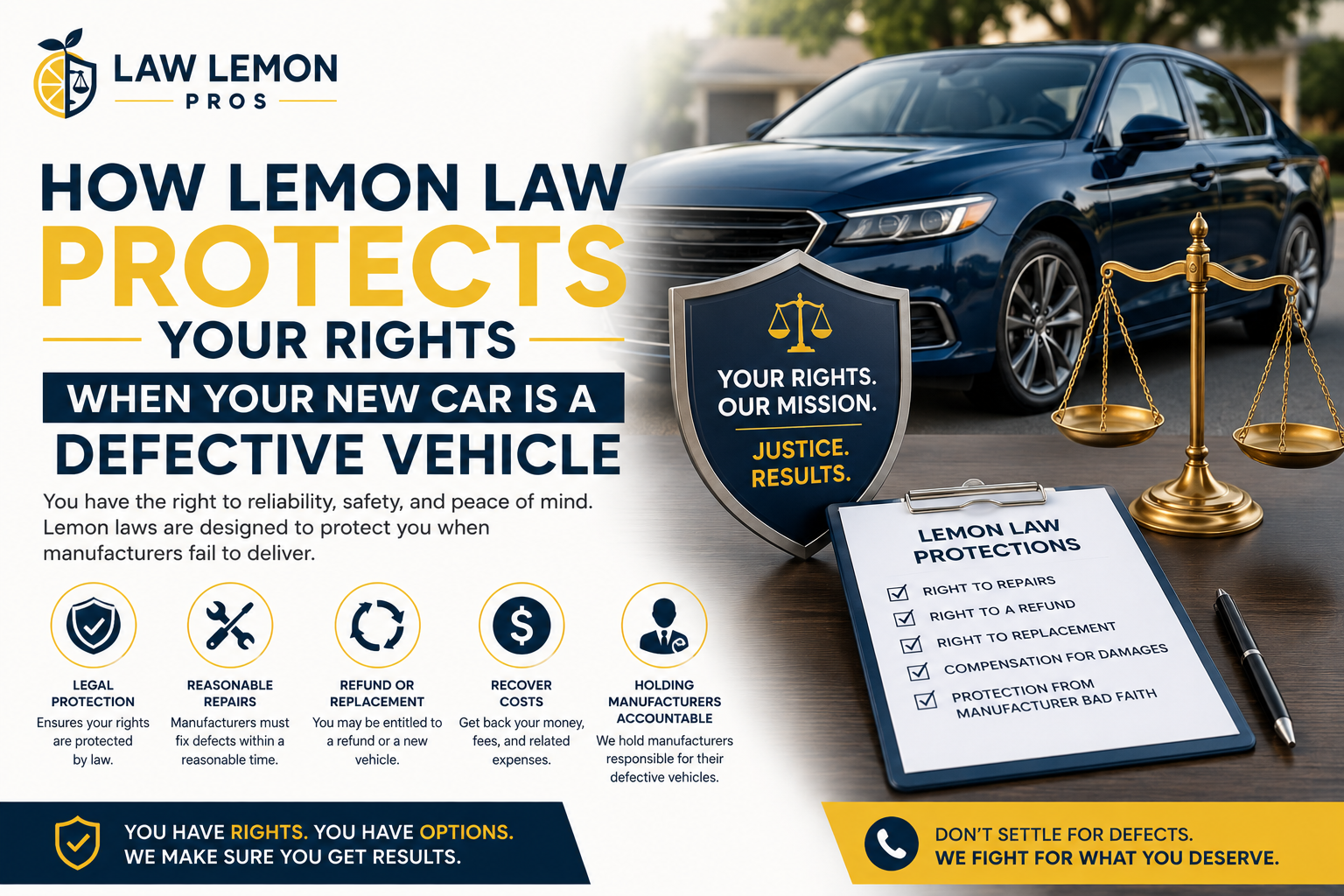
- Lemon Law Attorneys help evaluate whether a vehicle issue may qualify under consumer protection laws.
- Lemon Law Compensation may depend on warranty coverage, repair attempts, and defect severity.
- Not all vehicle defects qualify, and eligibility is determined by specific legal standards.
- Documentation such as repair records and warranties plays a critical role in case evaluation.
- A structured legal review helps clarify available options without guaranteeing outcomes.
Introduction
Lemon Law Attorneys assist vehicle owners in understanding their legal rights when dealing with persistent defects that may fall under consumer protection laws. These professionals review repair histories, warranty coverage, and documented issues to assess whether a vehicle may qualify for legal remedies such as compensation, replacement, or other resolutions.
This topic is important because modern vehicles rely on complex systems, and repeated mechanical or electrical failures can affect safety, reliability, and cost of ownership. Understanding how Lemon Law Compensation works helps consumers make informed decisions when facing ongoing vehicle issues.
What Are Lemon Law Attorneys?
Lemon Law Attorneys are legal professionals who focus on consumer protection laws related to defective vehicles. Their role is to evaluate whether a vehicle issue may meet the requirements established under state-specific lemon laws.
Core Responsibilities
- Reviewing warranty and service records
- Assessing repair attempts and defect history
- Explaining legal rights and obligations
- Identifying whether a claim may meet legal thresholds
- Guiding consumers through documentation requirements
Their work is primarily focused on legal evaluation and education rather than guaranteeing specific
Understanding Lemon Law Compensation
Lemon Law Compensation refers to potential remedies available under consumer protection laws when a vehicle has persistent defects.
Types of Compensation Considered
- Vehicle replacement
- Vehicle repurchase or refund considerations
- Cost-related adjustments depending on case factors
Each case is evaluated individually based on documented evidence and applicable legal standards.
When a Vehicle May Be Considered Defective
A vehicle is generally considered defective under lemon law frameworks when recurring issues affect its use, value, or safety.
Key Considerations
- The defect appears repeatedly after repair attempts
- The issue is covered under the manufacturer’s warranty
- The defect significantly affects normal vehicle operation
Not all mechanical issues qualify, and eligibility depends on specific conditions.
Common Vehicle Problems Reviewed in Claims
A Defective Vehicle Lawyer may review a wide range of reported issues during case evaluation.
Mechanical Issues
- Engine stalling or misfiring
- Transmission failure or delayed shifting
- Excessive oil or fluid consumption
Electrical Problems
- Sensor malfunctions
- Dashboard warning errors
- Battery drainage issues
Safety-Related Concerns
- Brake system irregularities
- Airbag system faults
- Steering response problems
These issues are evaluated based on severity, frequency, and repair attempts.
Role of a Defective Vehicle Lawyer
A Defective Vehicle Lawyer focuses on reviewing facts and determining whether legal criteria may be met under lemon law protections.
Key Functions
- Analyzing repair documentation
- Reviewing communication with manufacturers
- Identifying patterns in vehicle defects
- Explaining applicable legal standards
Their role is to provide structured legal insight based on evidence rather than assumptions.
Key Requirements for Lemon Law Evaluation
Lemon law cases typically rely on several important requirements.
Warranty Coverage
The defect generally must occur while the vehicle is under warranty.
Repair Attempts
Repeated repair attempts for the same issue are often reviewed as part of eligibility analysis.
Substantial Impact
The defect must typically affect:
- Vehicle safety
- Vehicle use
- Vehicle value
Each factor is assessed within the context of the specific case.
Importance of Documentation in Vehicle Claims
Documentation is a key element in evaluating Lemon Law Compensation eligibility.
Common Documents Reviewed
- Repair invoices
- Warranty agreements
- Service center reports
- Purchase records
- Manufacturer correspondence
Why Records Matter
Clear documentation helps establish:
- Timeline of defects
- Number of repair attempts
- Persistence of unresolved issues
Incomplete records may make evaluation more challenging.
Possible Outcomes Under Lemon Law
Lemon law cases may lead to different types of resolutions depending on legal and factual findings.
Vehicle Replacement
Some cases may involve replacement with a comparable vehicle.
Vehicle Repurchase
In certain situations, manufacturers may repurchase the vehicle under legal standards.
Other Resolutions
Additional resolutions may depend on negotiation and case-specific circumstances.
No outcome is guaranteed, and each case is assessed individually.
Limitations and Legal Considerations
Lemon law protections have limitations that vary by jurisdiction and case details.
Important Considerations
- Not all defects qualify under lemon law
- Warranty status is a key factor
- Legal thresholds must be met
- Evidence plays a central role in evaluation
Understanding these limitations helps set realistic expectations during the review process.
When to Seek Legal Guidance
Consumers may consider seeking legal guidance when:
- A defect continues after multiple repairs
- The same issue reoccurs repeatedly
- Safety concerns are involved
- Warranty disputes arise with manufacturers
Early evaluation may help clarify whether a situation may meet legal criteria.
Conclusion
Lemon Law Attorneys provide structured legal guidance to help consumers understand their rights when dealing with defective vehicles. Through review of repair history, warranty coverage, and documented issues, they help assess whether Lemon Law Compensation may be applicable under specific legal standards.
Because every case is different, outcomes depend on evidence, eligibility criteria, and applicable laws. Understanding these factors supports more informed decision-making for vehicle owners experiencing ongoing defects.
Summary
Lemon law protections are designed to address situations where vehicle defects remain unresolved after reasonable repair attempts. Lemon Law Attorneys help evaluate whether a case may qualify for compensation options such as replacement or repurchase.
Proper documentation and understanding of legal requirements are essential in assessing potential eligibility under consumer protection laws.
Book a Strategy or Discovery Call
A strategy or discovery call can help clarify how Lemon Law processes may apply to your specific situation. This discussion is informational in nature and focuses on reviewing general circumstances, documentation, and possible legal pathways.
It is intended to support informed decision-making without pressure or guarantees.
Frequently Asked Questions
1. What do Lemon Law Attorneys do?
They evaluate vehicle defect cases, review repair records, and explain potential legal rights under consumer protection laws.
2. What is Lemon Law Compensation?
It refers to potential remedies such as vehicle replacement, repurchase, or other resolutions depending on eligibility.
3. When does a vehicle qualify as defective under lemon law?
A vehicle may be considered defective if recurring issues affect its safety, use, or value after repair attempts.
4. Do all vehicle defects qualify for compensation?
No. Qualification depends on legal standards, warranty coverage, and documented repair history.
5. Why is documentation important?
Repair records and warranty documents help establish the timeline and nature of recurring vehicle issues.
6. What role does a Defective Vehicle Lawyer play?
They review case details and help determine whether a situation may meet legal criteria under lemon law.